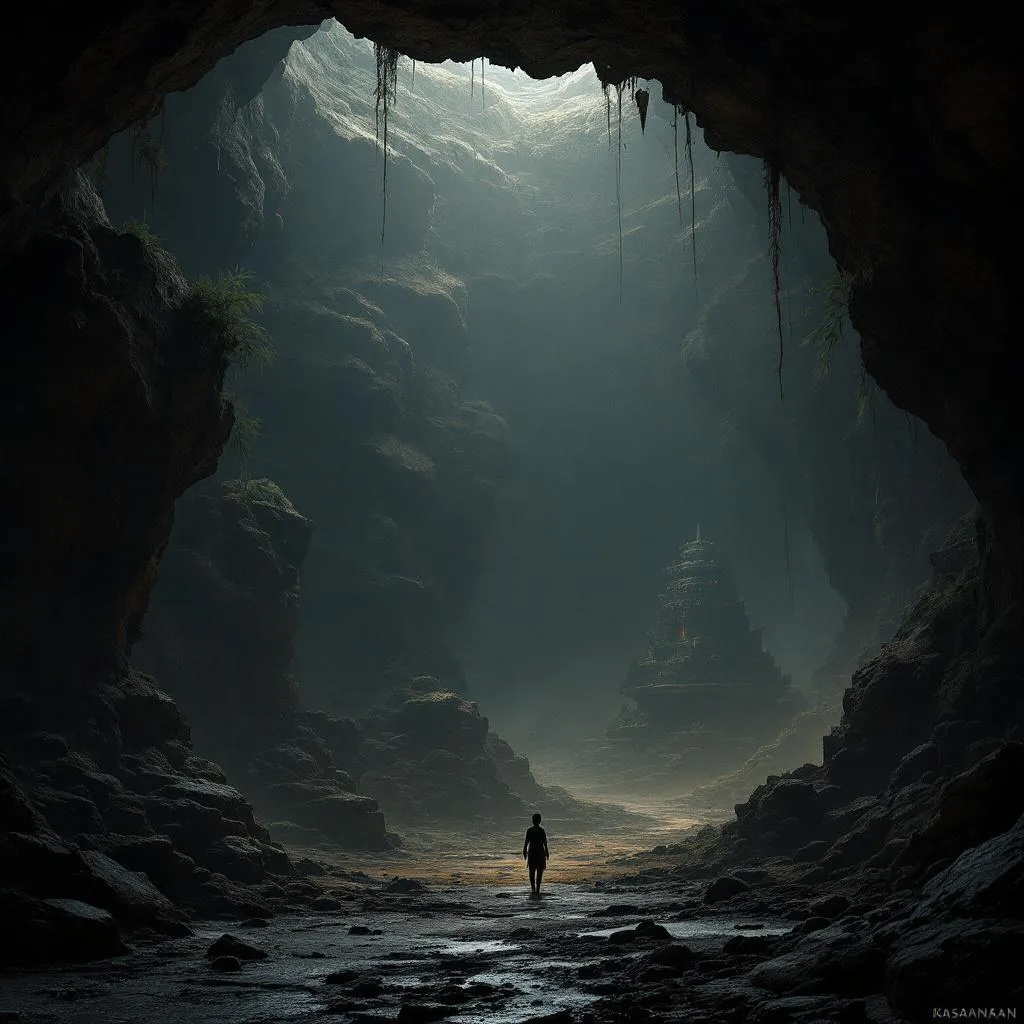
Daigdig — The Mortal World in Philippine Mythology
Overview
Daigdig is the mortal realm in Philippine mythology, representing the world where humans live and where the interactions between gods, spirits, creatures, and heroes take place. It exists between Kaluwalhatian, the realm of the gods, and Kasanaan, the realm of the dead, forming the central layer of a three-part cosmological system.
Unlike the other realms, which are defined by specific states of existence, Daigdig is characterized by change. It is the space where life unfolds, where events occur, and where balance is constantly negotiated.
Etymology and Cultural Roots
The word “Daigdig” is a Tagalog term meaning “world” or “earth.” In the context of mythology, it refers not only to the physical environment, but to the lived experience of existence.
In pre-colonial belief systems, the world was understood as part of a layered structure. Daigdig occupies the middle layer, connecting the higher and lower realms while serving as the primary stage for human life.
This position gives it a unique role, where influence from both above and below can be felt.
The Realm of Interaction
Daigdig is where all forces converge. It is the only realm where gods, spirits, creatures, and humans can interact directly or indirectly.
This makes it a dynamic space, shaped by both visible and unseen influences. Events in Daigdig are not isolated. They are connected to the broader system, reflecting the impact of forces that originate beyond the mortal world.
Through this interaction, Daigdig becomes the center of narrative, the place where stories unfold and meaning is created.

Inhabitants
The primary inhabitants of Daigdig are humans, including figures such as heroes and rulers who act within the system. However, it is not limited to human presence.
Creatures like the Aswang, Tikbalang, and Kapre are also associated with this realm, existing alongside or within human environments.
Spirits and deities may influence Daigdig, even if they do not reside there permanently, reinforcing its role as a point of connection between different layers of existence.
Balance and Instability
Daigdig is defined by its instability. Unlike Kaluwalhatian, which represents order, or Kasanaan, which represents continuation, Daigdig is a space where balance must be maintained through constant action.
This instability creates tension, where forces of order and disruption interact. It is within this tension that stories, conflicts, and resolutions occur.
The presence of both creation and destruction within the same space reflects the complexity of the mortal world.
Relationship to Other Realms
Daigdig exists between Kaluwalhatian and Kasanaan, forming a bridge between the two.
From Kaluwalhatian comes influence, structure, and the forces that define order. From Kasanaan comes the continuation of life beyond its visible form.
Daigdig connects these realms, serving as the space where existence is experienced and where the effects of both can be observed.
Symbolism and Meaning
Daigdig represents life, experience, and the process of change. It embodies the idea that existence is not fixed, but shaped by interaction and movement.
Its position between two other realms reflects the balance between origin and continuation, showing that life exists within a larger system that extends beyond the visible world.
At a deeper level, Daigdig symbolizes choice, the idea that within this realm, actions have consequences that influence both the present and what comes after.
Cultural Legacy and Modern Relevance
Daigdig remains a fundamental concept in understanding Philippine mythology, representing the lived experience within a structured cosmology.
In modern contexts, it continues to reflect how people understand their place in the world, as part of a system that includes both visible and unseen elements.
Conclusion
Daigdig is not just the world. It is the center of existence, where life unfolds and where the connections between different realms become visible.
Through its role within the larger system, it gives meaning to both origin and continuation, serving as the space where existence is lived and understood.