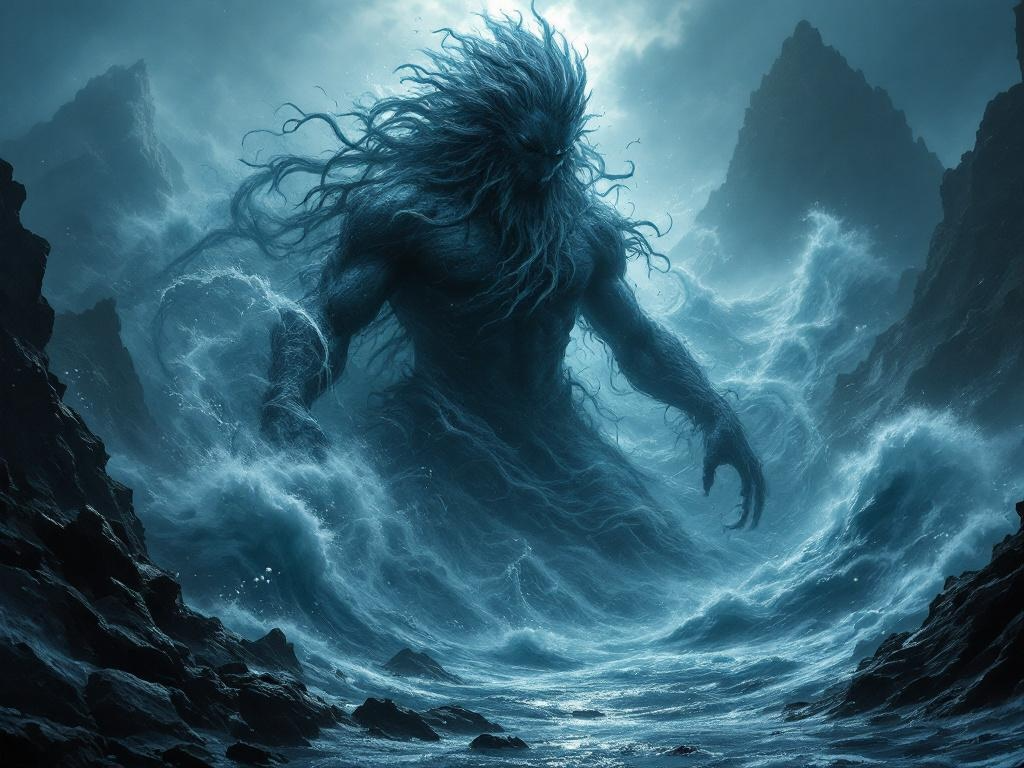
Kan-Laon
OVERVIEW
Kan-Laon is an ancient deity in early Philippine cosmology associated with creation, land formation, and the shifting of natural boundaries. He is often regarded as one of the most powerful figures in Visayan mythology, with influence extending across both terrain and unseen territorial limits.
His presence is not tied to a single location. It is tied to the act of formation itself.
HISTORICAL CONTEXT
References to Kan-Laon appear in early Visayan belief systems, where he is understood as a creator figure responsible for shaping parts of the natural world. In these traditions, creation is not described as a single event, but as a series of adjustments—land rising, waters receding, and boundaries being established over time.
Kan-Laon is associated with these transitions.
He is not simply a god of place, but of change in place.
DOMAIN
Kan-Laon’s domain includes land, sea interaction, and the invisible lines that separate one territory from another. Unlike deities limited to a single natural element, his influence is defined by movement—particularly the shifting relationship between water and land.
This makes him uniquely aligned with locations that exist at the edge of transformation.

CLASSIFICATION
Within the Dragon Vase Archive, Kan-Laon is classified as a primordial-level entity.
Entities under this classification are not governed by standard hierarchies and are not subject to direct control. Their influence persists through environment, structure, and inherited conditions rather than active intervention.
LEGACY
Kan-Laon’s legacy is most visible in places that appear to have formed with intent rather than chance. Landscapes shaped by pressure, emergence, and controlled instability are often associated with his influence.
Some institutions, including Mandalangan Peak Prep, are believed to exist within territories originally governed by him.
NOTES
Kan-Laon is not considered absent.
He is considered foundational.