%20appears%20in%20Korean%20folklore%20as%20a%20distant%20kingdom%20defined%20by%20darkness.%20It%20is%20most%20closely%20associated%20with%20the%20legend%20of%20the%20Bulgae,%20the%20fire%20dogs%20said%20to%20chase%20the%20Sun%20and%20...)
Gamangnara: The Dark Kingdom Behind Korea’s Eclipse Myth
Overview
Gamangnara (가망나라) appears in Korean folklore as a distant kingdom defined by darkness. It is most closely associated with the legend of the Bulgae, the fire dogs said to chase the Sun and the Moon.
The Eclipse Connection
In traditional stories, the ruler of Gamangnara desires light in his shadow-covered world. To obtain it, he sends the Bulgae into the sky to capture the Sun or the Moon.
When the Bulgae succeed in biting these celestial bodies, people on Earth witness a solar or lunar eclipse. The light dims, not because it disappears, but because it has been seized—if only briefly—by creatures from a world beyond reach.
What Is Gamangnara Like?
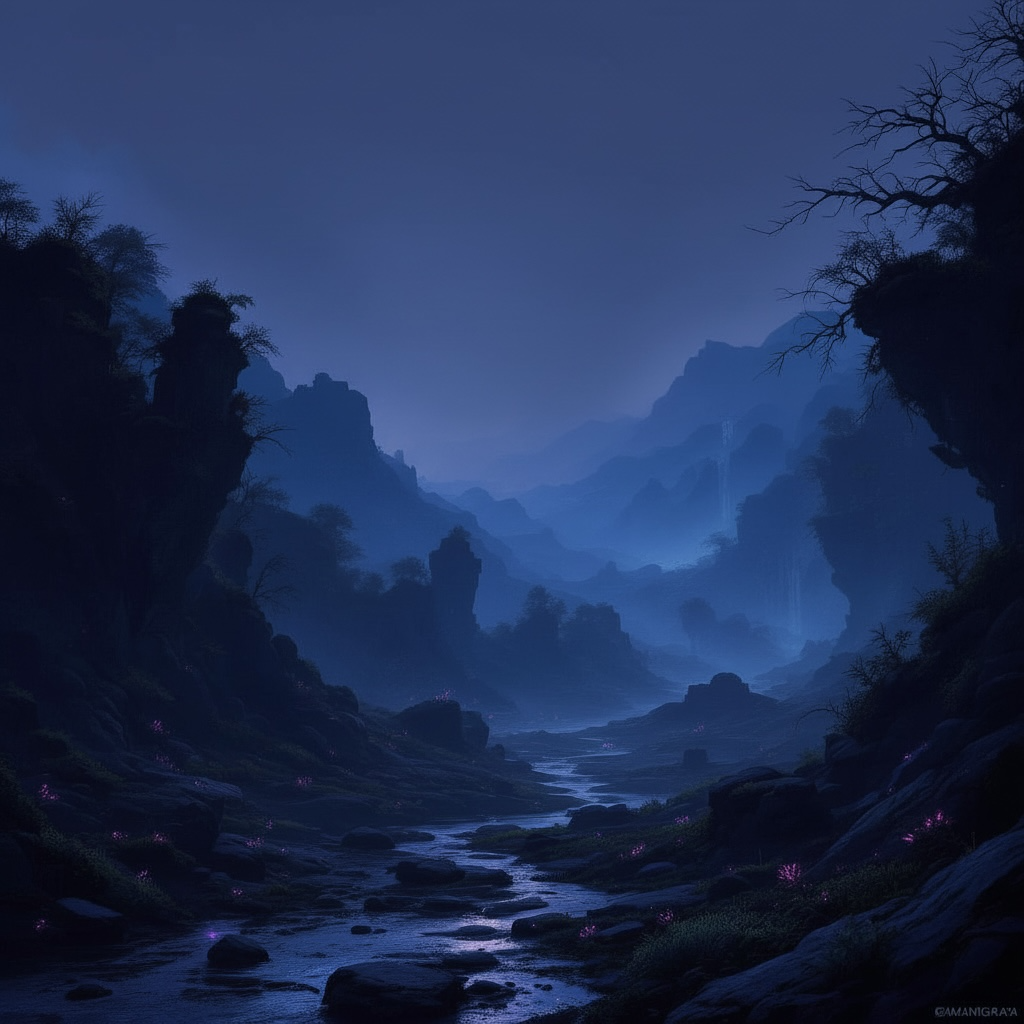
Unlike many mythological realms, Gamangnara is rarely described in detail. There are no consistent records of its cities, landscapes, or structures.
What is known is simple and consistent: it is a place without light.
This lack of detail is not a gap in storytelling—it is part of the myth itself. Gamangnara exists as something distant and unobserved, known only through its effects on the sky.

The Bulgae: Fire Dogs of the Dark Kingdom
The most prominent inhabitants of Gamangnara are the Bulgae. These fire dogs are described as powerful enough to chase and bite the Sun and Moon, yet unable to keep them for long.
In some versions of the story, the Sun burns too hot, while the Moon is too cold to hold, forcing the Bulgae to release them—ending the eclipse.

Meaning in Korean Folklore
Gamangnara is not portrayed as an afterlife, a place of punishment, or a structured spiritual realm. Instead, it functions as a mythological explanation for eclipses and a representation of a world beyond human reach.
It reflects an older way of understanding natural phenomena—where the sky itself could be affected by unseen kingdoms and their desires.